Hugo Schulz · 2 September 2026
Polish researchers have made significant strides in analyzing lunar soil, also known as regolith. Their work focuses on improving techniques for studying samples from the Moon's surface, which could aid future missions and resource utilization efforts.
Improved Analytical Methods
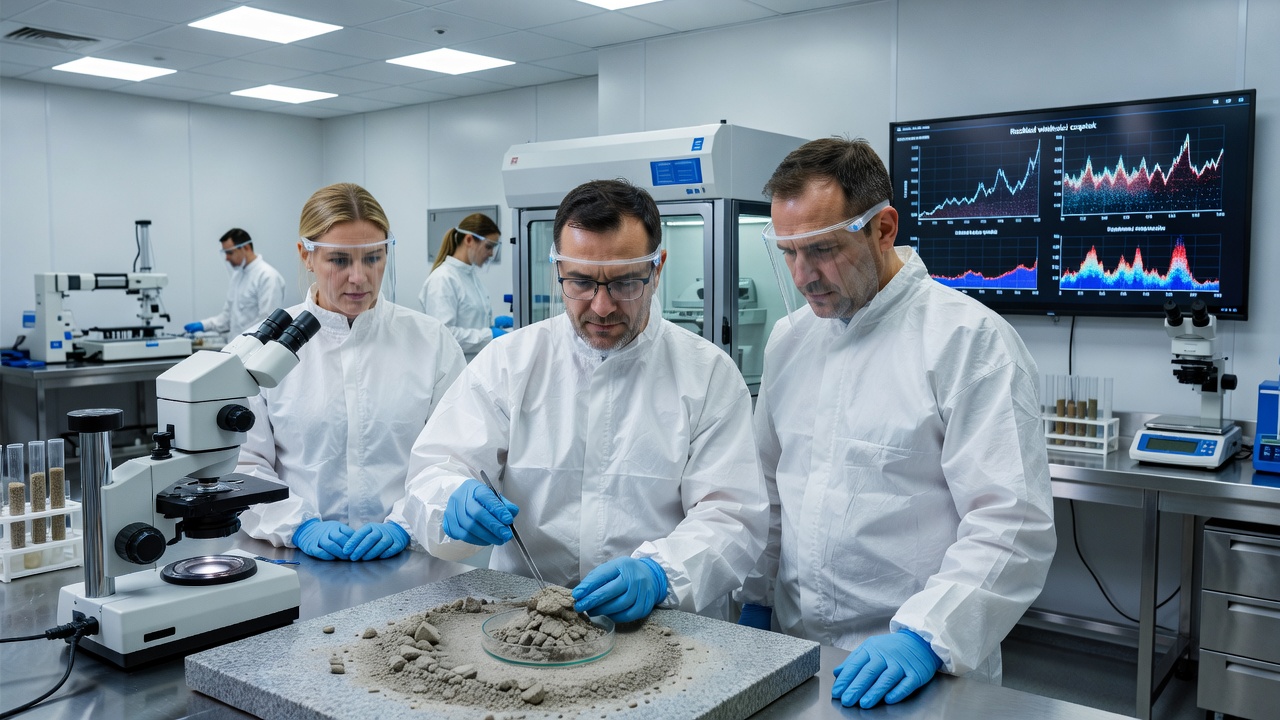
The team at the Polish Academy of Sciences has developed new spectroscopic methods that allow for more precise identification of minerals in lunar samples. This advancement reduces the time required for analysis and increases accuracy. By using advanced laser techniques, they can detect trace elements that were previously difficult to identify. The research involves collaboration with international space agencies to validate their findings against known lunar meteorites. Furthermore, the new methods incorporate machine learning algorithms to process large datasets from soil samples. This innovation helps in mapping the distribution of resources like helium-3, which is of interest for potential lunar mining operations. Polish scientists have published their preliminary results in peer-reviewed journals, highlighting the potential applications in both scientific research and commercial ventures. Additional testing in controlled chambers simulates extreme lunar conditions to refine protocols.
Implications for Lunar Exploration
The implications of these techniques extend to upcoming lunar missions, including those planned by NASA and ESA. By refining soil analysis, researchers can better understand the Moon's geological history and composition. This knowledge is crucial for selecting landing sites and planning resource utilization. Educational programs at lunarpath.edu.pl are incorporating these findings to train the next generation of lunar scientists. Additional experiments are underway to test the techniques in simulated lunar environments. The Polish team emphasizes the importance of interdisciplinary approaches, combining geology, chemistry, and physics. Their work not only advances scientific understanding but also positions Poland as a key player in the global space research community. Future plans include developing portable analysis tools for use on the lunar surface itself, fostering broader international partnerships.