Hugo Schulz · 2 September 2026
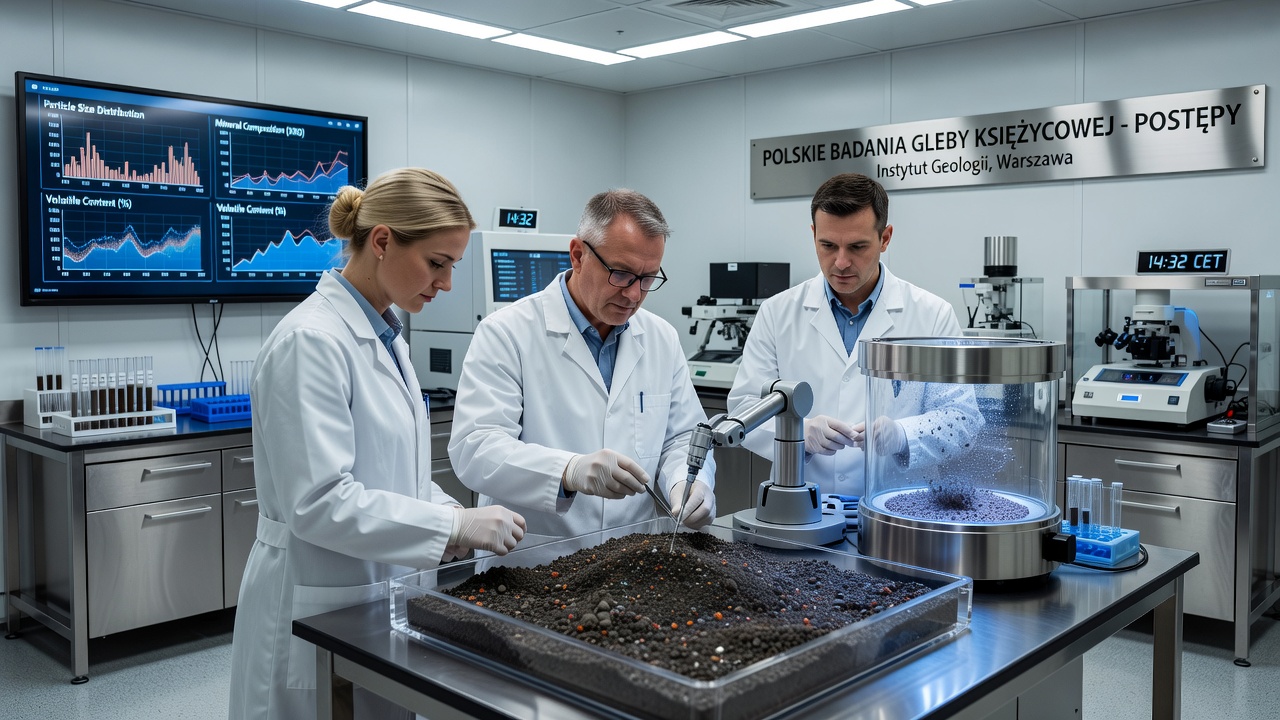
Polish researchers have developed advanced techniques for analyzing lunar soil samples, potentially revolutionizing our understanding of the Moon's composition and resources. This breakthrough comes from collaborative efforts at institutions across Poland, focusing on non-destructive testing methods that preserve sample integrity.
Understanding Lunar Regolith Properties
Lunar soil presents unique challenges due to its fine, abrasive nature and lack of moisture or organic matter. Traditional Earth-based analysis methods often fall short when applied to extraterrestrial materials because of differences in gravity, radiation exposure, and particle interactions. The Polish team has addressed these issues by integrating advanced spectroscopy with machine learning algorithms to identify mineral compositions more accurately than ever before. Their research builds on data from previous Apollo missions and recent Chinese lunar samples returned by Chang'e missions. By refining these methods, they aim to unlock secrets about the Moon's geological history and potential resources like water ice in polar regions.
Key innovations include enhanced X-ray fluorescence techniques that require smaller sample sizes, reducing the risk of contamination during handling. This is crucial for preserving rare lunar materials for future studies by multiple research groups. Additionally, the researchers have created detailed simulation models that mimic lunar conditions on Earth, allowing for better calibration of instruments under vacuum and extreme temperature variations.
Implications for Future Exploration
The advancements have broad implications for upcoming lunar missions, including resource utilization for oxygen production and construction materials from regolith. By improving analysis accuracy, scientists can better assess the viability of in-situ resource utilization strategies essential for sustainable human presence on the Moon. International collaborations are already underway, with the Polish methods being tested against data from NASA's Artemis program preparations and ESA's lunar initiatives.
Further developments include portable analyzers for use by astronauts on the lunar surface. These tools could provide real-time data, enhancing mission efficiency and safety during extravehicular activities. The research team's findings were published in a leading scientific journal, garnering attention from the global space community and inspiring similar projects in other countries. Continued funding from the Polish government and European Space Agency supports ongoing experiments and refinements to these techniques, ensuring long-term contributions to lunar science.
Overall, this progress underscores Poland's growing role in space research and education, paving the way for more discoveries in lunar science and fostering international partnerships that could accelerate humanity's return to the Moon.